Feb 28, 2011

Pulau Sipadan, Sabah - Coconut (part3)


Categories: ,

Feb 26, 2011

Sipadan, Sabah - part 2

UnderWater


Categories: ,

Feb 23, 2011

Pulau Sipadan, Sabah


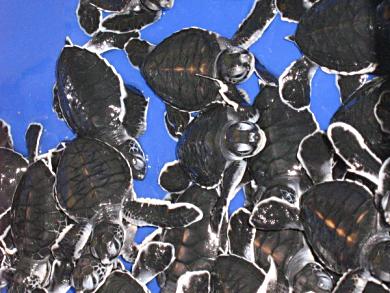
The name of Sipadan is simply legendary in diving circles, conjuring images of twirling tornados of barracudas and jacks, patrolling hammerhead sharks, millions of technicolored reef fish and, above all, dozens of sea turtles swimming peacefully everywhere. 


"Sipidan, Borneo: The waters of Indonesia meet the waters of Malaysia at the 'Ring of Fire'. Within this underwater circus lies one of the world's freshest dive sites - Borneo's Sipidan Island. Seeing 10 green and hawksbill turtles in one dive is not uncommon, nor is seeing a school of 300 barracuda and hammerheads The proximity of dives to shore allows you to gear up, swim out a few yards, and get some of the best diving of your life."


As I discovered, most people go to Mabul to dive Sipadan, that great pelagic sea mount made famous by Jacques Cousteau, home to the turtle tomb, thousands of live turtles and millions ofschooling pelagics. The reason they choose Mabul over Sipadan is mainly because the accommodation at Smart Diver Resort on Mabul is slightly more upmarket than that found on Sipadan, offering private en-suites, fresh (not brackish) showers and loads of hot water.


If you're diving Sipadan from Mabul (only 15 minutes away by boat), then you're out for the whole day. This isn't a problem because the boats are huge with lots of room, full awnings and even shelves overhead for dry gear. Between dives, have your surface interval sitting on the famous Sipadan wharf, or perhaps,walking along the beach. Lunch is a picnic affair on the back side of Sipadan Island. After three dives, you'reback on Mabul in timefor a hot shower and a late-afternoon cup of tea or coffee, which is always accompanied by a scrumptious Asian pastry of some sort.


Categories: ,

Feb 22, 2011

Ondeh-Ondeh

Onde-onde (Ondeh-ondeh)
Onde-Onde is one of the traditional kuih in Malaysia (kuih is term for Malaysian cakes, pastries if you will). They are either made from sweet potato or glutinous rice flour…
Onde-onde (Ondeh-ondeh)
The cute little onde-onde–also spelled as ondeh-obdeh–are infused with pandan (screwpine leaf) juice and filled with “Gula Melaka” or palm sugar and then rolled in with some fresh grated coconut. The palm sugar that’s in it literally bursts in your mouth when you take a bite. They are sweet and delicious.
I hope you will try this onde-onde (ondeh-ondeh) recipe. They taste great!
ONDE-ONDE (ONDEH-ONDEH) RECIPE
INGREDIENTS:
250 g Glutinous Rice Flour
200 ml Pandan Juice
150 g  Gula Melaka (Palm Sugar), finely chopped
100 g Grated Coconut
A Pinch Of Sea Salt
METHOD:
In a large bowl, combine the glutinous rice flour with Pandan juice and knead lightly. Pinch a small piece of the dough (about 40 g) and drop it into boiling water. When the dough rises up the surface, remove it with a slotted spoon and shake off the excess water. Mix it back into the main dough and knead well to form smooth dough. Cover the dough and set aside for about 15 minutes.
Mix the grated coconut with a pinch of salt and steam for about 2 – 3 minutes and let it cool completely.
Bring a pot of water to boil. Pinch a small piece of dough (about 15 g each) and flatten lightly. Fill the center of the dough with palm sugar. Roll them in your palm to form a smooth ball and cook the glutinous rice balls in the boiling water. When the rice balls float to the surface, remove them with a slotted spoon and shake off the excess water.
Coat the rice balls with grated coconut and serve immediately.
COOK’S NOTE:
To make the Pandan Juice. Blend 10 Pandan leaves with 220 ml water.

Categories: ,

Feb 21, 2011

Mee Udang

Mee Udang (Malay Prawn Noodle)
Mee Udang. Mee Udang or Malay Prawn Noodle is very famous in Penang. One can easily find it at Malay hawker stalls near seaside, where the prawns are fresh from the sea…
My place is just walking distance to the seaside. I can get fresh sea prawns directly from fisherman at a very low cost. That gives me the privilege to share my home cooked Mee Udang here. A plate of yellow noodle top with huge fresh prawns in sourish tomato gravy, it is indeed appealing.
MEE UDANG (MALAY PRAWN NOODLE)
Serves 2
INGREDIENTS:
250-300gm yellow noodle
600gm of big-sized sea prawns (I got 8 big prawns)
5 tbsp of tomato sauce
200gm of tomatoes, diced
400ml of water
4 cloves of garlic, peeled and chopped
6 shallots, peeled and sliced
Cooking oil
2 tbsp of sugar
1 ½ tbsp of chili paste
Light soy sauce to taste
GARNISHING:
3 leaves of lettuce, thinly sliced
2 eggs, hard-boiled, peeled and halved
2 calamansi lime, halved
1 stalk of spring onion, chopped
1/4 of onion, thinly sliced
Fried crispy shallot
METHOD:
1. Blend the diced tomatoes with 400ml of water. Set aside.
2. Blanch the yellow noodle and set aside.
3. Heat enough oil in a wok, deep fried sliced shallot till golden brown, set aside.
4. Leave about 2 tbsp of oil in the wok, saute garlic till fragrant. Add prawns and stir fry with 1 tbsp of light soy sauce for 1 minute.
5. Pour in the tomato puree. Add tomato sauce and chili paste. Bring the gravy to simmer under medium heat. Add sugar and light soy sauce to taste.
6. Add in the yellow noodle to the simmering gravy. Mix well.
7. Serve up and garnish with onion, spring onion, egg, lettuce, calamansi lime and fried shallot

Categories: ,

Feb 19, 2011

Cherating, Pahang

Asia’s first Club Med and the nocturnal ritual of turtle nesting give Cherating its appeal. Discover one of the finest beach spots on the east coast of the peninsular.
The calm blue waters of the South China Sea make Cherating one of the most alluring beach resorts in Malaysia.
Located 47 km north of Kuantan, the capital of Pahang, Cherating is home of the world famous Club Med. A number of water sports such as catamaran sailing and kayaking can be enjoyed here. The excellent wind conditions in Cherating make it the perfect site to windsurfing and kite flying.
Hire a bicycle and explore the beach surroundings. Look out for small eateries by the roadside selling inexpensive local favourites and interesting stalls selling souvenirs.
Experience the rustic and laid-back atmosphere at the Cherating Village and take home a handicraft or batik souvenir.
Chendor Beach just a few minutes from Cherating is a favourite spot for turtle watching. The turtle sanctuary here is where turtle come to lay eggs during nesting period.
Nearer to the town of Kuantan are the beaches of Teluk Chempedak and Balok. Sailing, windsurfing and waterskiing can be enjoyed when the wind and sea conditions are favourable. Beserah, less than then minutes from Kuantan is a fishing village. An interesting sight here is water buffaloes on the beach transporting fish to the markets at certain times of the year.
Getting There
By Road
Cherating is a 5 hour drive from Kuala Lumpur via the scenic route to the east coast. There are buses from Kuantan departing daily from Kuala Lumpur. From Kuantan, there are regular bus and taxi services to Cherating. Alternatively, take a bus from Kuala Lumpur to Dungun or Kemaman in Terebgganu, and disembark at Cherating.
By Air
Malaysia Airlines has daily flights to Kuantan. From the airport, Cherating is just 45 minutes away.

Categories: ,

Feb 17, 2011

Pulau Tioman, Pahang

Pahang, the largest state in Peninsular Malaysia, is also home to Tioman, an enchanting island in the South China Sea. The state is blessed with a beautiful coastline, which offers endless tropical bliss for sun-seekers.
Hailed as one of the best island getaways in the world, Tioman is famed as the setting for “Bali Hai” in the Hollywood musical, South Pacific.
Tioman is the largest and most developed of the volcanic islands that form the Tioman Marine Park. According to legend, the island is the final resting place of a beautiful dragon princess. Till today, the island bears startling resemblance to a sleeping dragon.
A sense of peace, tranquility, and simplicity embraces visitors upon arrival.
The waters around Tioman are ideal for a host of water sports activities, including swimming, boating, kayaking or windsurfing. Its warm waters and good visibility make it a paradise for underwater explorations. Discover astounding sights such as colourful gorgonian sea fans, staghhorn corals, nudibranchs and beautifully sculptured sea sponges.
Marine life such as Napolean fish, golden striped Trevally, Bumphead parrotfish and shoals of fusiliers swim playfully in the depths.
Those without a strong affininity to water can still enjoy these sights in a glass-bottomed boat. Divers will enjoy trips to outlying islands as it provides opportunities to encounter harmless Black-tip sharks, Murray eels and other pelagic species.
For a touch of adventure, take a boat ride to Monkey Beach, or the uninhabited islands of Tulai and Renggis for a swim and a picnic.
There are several villages scattered around the island’s coastline, the larger ones being Salang, Tekek, Genting, Paya and Juara. Each village offers a different atmosphere and will be a unique experience to enjoy.
Salang, situated on the northwest of the island, enjoys immense popularity for its crystal-clear waters and colourful corals close to the shoreline. Spend a day exploring the vibrant underwater gardens or enjoy a nap in a hammock while hearing the soothing sound of gentle waves. A stroll by the beach in the evening will reward visitors with a spectacular view of the sun setting against the horizon.
Tekek, located midway on the island’s western coastline, has the longest stretch of beach on the island. This village is the gateway to Tioman by air and sea. It is also the closest village to the Berjaya Tioman Beach, Golf & Spa Resort, the island’s only five-star accommodation.
The Genting Village, further south of Tekek, is enveloped by a serene and rustic atmosphere. The tranquil beach boasts stretches of golden sand ideal for long strolls by the shore.
Juara, on the east coast of the island, is a secluded hide-away boasting a wide beach fwith fine spots for swimming, sunbathing or camping. Marvellous views of sunrise can be seen from Juara.
The island’s southernmost village, Mukut, is surrounded by natire at its purest forum. Towering against its skyline are the Twin Peaks or Dragon’s Horns, and unmistakable landmark of the island.
Getting There
By Road
Tanjung Gemok in Pahang and Mersing in Johor, are two take-off points to Tioman. Tanjung Gemok is a 3 ½ hour drive via North-South Expressway. Visitors can exit at the Senawang Interchange, and proceed to Maudzam Shah and Rompin before arriving at Tanjung Gemok. To get to Mersing from Kuala Lumpur, exit Kluang in Johor on the North-South Expressway.
By Air
Berjaya Air operates daily flights to Tioman from Sultan Abdul Aziz Shah Airport in Kuala Limpur and Seletar Airport in Singapore.
By Sea
The island is accessible by boat from the jetties in Tanjung Gemok and Mersing. The ride takes about 1 hour and 30 minutes depending on sea conditions. Tioman is also accessible from Tanah Merah Ferry Terminal in Singapore. Journey time is 4 hours and 30 minutes.

Categories: ,

Feb 16, 2011

Pulau Langkawi, Kedah

The island of Langkawi, Malaysia is an exotic holiday destination that offers accommodation of all kinds (from budget beach chalets to the most sybaritic five star resorts) and amenities sitting side by side with idyllic beaches, ancient rainforests and quaint villages. Langkawi Malaysia is an archipelago of 99 tropical islands (or 104, depending on tide) off the north-western coast of Peninsular Malaysia, about 30km from Kuala Perlis on the mainland. They’re accessible by boat from Penang, Kuala Perlis, Kuala Kedah and Satun, Thailand, or by air from Penang, Kuala Lumpur and Singapore.
The only island with any real settlement is the eponymous 478sq km Pulau Langkawi; the only other inhabited island being nearby Pulau Tuba. The archipelago has some of the world’s most pristine rainforests, limestone and karst formations, caves with stunning stalactites and stalagmites, and among the world’s most beautiful beaches washed by clear emerald waters teeming with marine life.
Langkawi, Malaysia is warm and sunny all-year-round. Humidity is high and the annual average temperature is 25C – 32C. The island was named after two Malay words – ‘lang’ (eagle) and ‘kawi’ (reddish brown), hence the imposing eagle statue at Dataran Lang (Eagle Square), welcoming visitors who arrive on the island through the Kuah Jetty.


There’s so much to see and to do in Langkawi; diving and snorkeling in the pristine water filled with rich marine life tops the list for most people. You can also take a cable car ride up the mountain that offers a breathtaking 360 degrees panoramic view of the islands, the rural lowlands and the seas as far as Thailand. For nature lovers, you can explore the lush forests and appreciate the unique wildlife of the islands from a different perspective.
Public transport on Pulau Langkawi is limited, so you usually need to call a cab or rent a car, motorbike or bicycle – all are readily available.
There’s a huge variety of food available on Pulau Langkawi, ranging from cheap and good hawker food to a splurge for gourmet food in the restaurants. The famous laksa is not to be missed.
Langkawi, Malaysia is a duty-free shopping destination. Other than cameras, branded items, electronic gadgets, shop for lovely silk batik, handicraft and local products, especially those from the fishing villages.

Categories: ,

Copyright © JommJalan | Powered by Blogger