Sep 28, 2010

Putu Mayam

@ SS3 Night Market, PJ


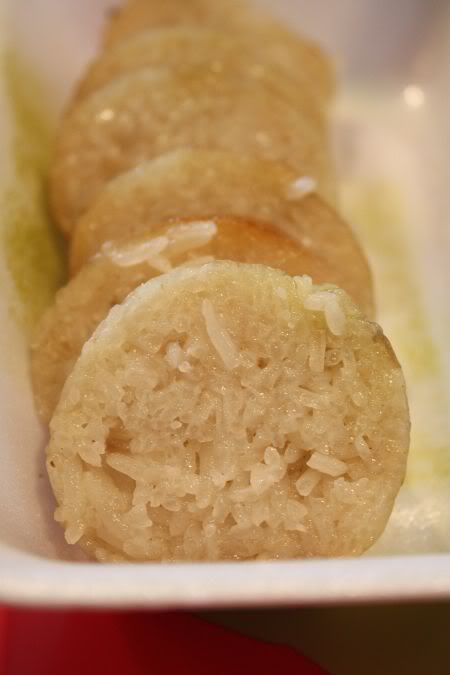
It's amazing what you get to see at night markets (Pasar Malam in Malay) and I was bowled over by this little stall at the SS3 market which is held every Tuesday. They were selling all kind of Indian goodies but what was unique about them was it was freshly made on the spot for you. It was my first time seeing how they make
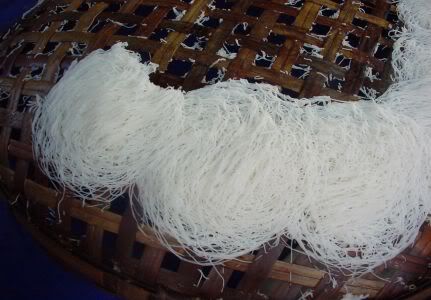
putu mayam or string hoppers. This guy had a tub full of white dough which is made by mixing rice flour and water together. He takes a large portion of it and stuffs it in a sieve and presses down. Strings of the dough will come out and he twirls it around to make it in a round.

The guy was working extremely fast hence I had to take a few pictures before I could actually get a good picture. Here you have a close up of the putu mayam. It is then steamed on the wooden baskets and placed in front of the stall to be sold. You eat it with freshly grated coconut and brown sugar.

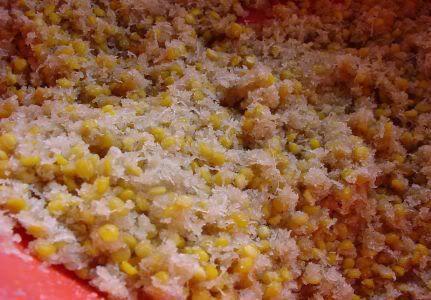
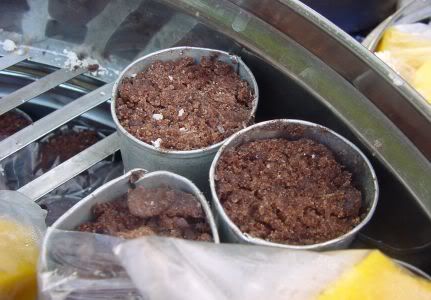
They were also making this sweet puff (no idea what is the Indian name as the lady just told me it was called sweet puff) with the same dough. A piece of flattened dough is placed in the mold and then the filling (seen below) is added. Another piece of flattened dough is then placed on top and the mold is pressed together to shape them into puffs. These are also steamed before being sold.


The filling of the sweet puff consists of yellow chick peas and grated coconut that has been sweetened.

Categories:

Fried Chicken

@ Kg Attap Stall, KL

Yesterday, since I had to make a trip to Bina Warehouse to buy the kitchen sink (which cost a bomb!), I could happily enjoy my favourite fried chicken at the stall in Kampung Attap.


It's been a while since I ate here but nothing has changed and the food is still great plus most importantly, no change to their prices. They are famous for their fried chicken which is crispy and not dry on the inside. Just like the
Kampung Attap fish head curry stall, you get rice with vegetables and curry sauce plus the chopped up fried chicken. If fried chicken is not your choice with the bird flu scare, you can opt for the various curries they also serve.


Usually whenever you go to an Indian restaurant, they would have pre-fried the chicken ahead of time hence it's dry and tasteless. Here they fry small batches at one time and will make fresh ones when it runs out.


The place is just a shack at the corner of a road which gets pretty decent business during lunchtime - you get the office crowd, the runners and once I even saw some foreign executives eating here. It's not as packed as the fish head curry stall but they must be doing quite well throughout the years as we heard that the owner who used to drive a van could upgrade his car and even open a branch in Australia.

So how much is my plate of fried chicken rice? It's only RM3.50 which makes it a fantastic deal and cheaper than the fish head curry stall. In terms of comparison, I would say the curry they serve at the fish head curry place is much better (more taste) but this place's crispy fried chicken is still my favourite.

Categories:

Santai Kitchen

@ Tesco Mutiara Damansara

Recently Tesco Mutiara Damansara has gone to a facelift with new restaurants opening there such as King Pie (the South African franchise pie makers), Old Town Kopitiam and a bigger Santai Kitchen which originally started out as a stall within the food court. It's a branch of theSantai in Taman Tun Dr. Ismail which I had blogged about last year. The last time we ate at Santai, we ordered dishes but in this particular outlet, one dish meals are extremely popular as they're simple and fast.


So far, we have had two meals there as we usually grab a quick meal before we do our grocery shopping at Tescos. There are many varieties of fried rice here but I tried something I have not had before called Nasi Goreng Kerabu(RM5.00). This version is spicy with bean sprouts, chopped long beans, diced cucumber, chicken cubes and thai chilli sauce. Very nice fried rice and I enjoyed the spicy notes in it.


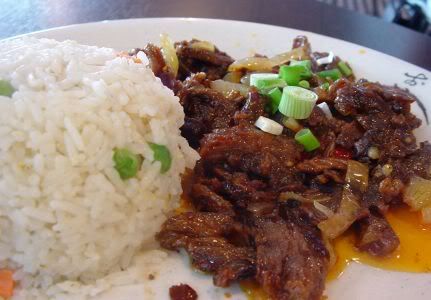
Splashie Boy had the Nasi Daging Masak Merah(RM6.00) which is just plain rice served with a fried beef dish in tomato sauce. It's one of his favourites as we ordered this before in the main Santai restaurant too as they do it really well here.


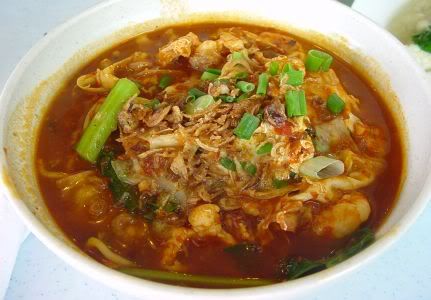
On our first visit there, I had Mee Bandung(RM5.00) which is yellow mee served in a spicy chilli prawn based soup. The soup is made from a chilli paste of grinded dried prawns, chillies, garlic and shallots. It's then fried in oil until it's fragrant then coconut milk is added into it. Then it's up to you what you wish to add into your Mee Bandung but usually it has a fried egg topping it with spinach in the soup.


Splashie Boy had the Cantonese Fried Kuay Teow(RM5.00) which is rice noodles fried that comes with a thickened stock base. It has pieces of chicken, kailan and an egg to thicken the soup base. Although it's a bit pale looking (the Chinese usually add soya sauce to the fried noodles to make it browner), it tasted great.

They also serve a pretty decent Ice Kacang(RM3.50) here with rose syrup and lots of ingredients like red bean paste, glass jelly cubes, cendol bits, palm seeds and peanuts. Sorry there's no picture of it as it came out a bit blurry. During peak times, this place is always packed with people but they serve the food really fast so you don't really need to wait too long. If you want the same dishes but a nicer environment, try their outlet in Taman Tun Dr Ismail. They also sell cakes like tiny cream puffs, chocolate cakes, brownies at the outlet which you can order.

Categories:

Sep 22, 2010

Beef Rendang


Beef Rendang

Ingredients

500 g Lean Beef (use a stewing cut)
1 Cup Grated Fresh Coconut or Dessicated Coconut
15 - 20 Dried Chilies, cut into smaller pieces, soaked in warm water
15 (150 g) Shallots, peeled and sliced
2 cm (1 inch) piece Ginger, peeled and sliced
2 cm (1 inch) piece Galangal, peeled and sliced
3 Stalks Lemongrass (white section only)
1 cm ( 1/2 inch) piece Fresh Turmeric Root, peeled and sliced
600 ml Coconut Milk
200 ml Water
2 pcs Asam Gelugor/Keping (Dried Tamarind Skin)
2 Kaffir Lime Leaves
2 tsp Sea Salt or to taste
2 tsp Sugar or to taste

Method

Cut the beef into slices 2 cm (1 inch) by 3 cm ( 1 1/2 inches).

Prepare the kerisik (dry roasted grated coconut) by placing the grated fresh or desiccated coconut into a dry wok over low heat. Do not add any oil. Toss and stir coconut over a low heat until the coconut is crisp and golden brown. Remove from the heat. Cool the coconut slightly then grind it finely in a food processor. Set aside.

Grind the chilies, ginger, galangal, lemongrass and turmeric root with enough water until you get a fine paste.

Place the beef, ground chili paste, coconut milk in a large wok. Bring the mixture to a boil then reduce to a simmer. Stir occasionally until most of the coconut milk has evaporated - a red film of oil will rise to the surface.

Add the asam gelugor, kaffir lime leaves and kerisik. Mix well and season with salt and sugar.


(Recipe adapted from Rohani Jelani)


Categories:

Sep 21, 2010

Recipe - Rendang Tok


Ingredients

1 kg beef, cut into 1 inch cubes

To be blended together:
10 fresh red chillies
8 dried chillies, soaked
20 shallots
1 head garlic
5 stalks lemongrass, use only the bottom white part
1 knob ginger
1 big knob galangal
1 big knob tumeric
1/2 tsp cumin powder (jintan putih)
1 tsp fennel powder (jintan manis)
1/2 tsp black pepper
1 tbsp dark soya sauce
1 tsp salt
1/2 cup water

Dry spices:
2 star anise
3 inch cinnamon bark
7 cardamoms
6 cloves

Leafy stuff:
coconut cream from 2 coconuts
1/2 grated coconut, toasted over a low flame til dry and browned
5 stalks lemongrass, top trimmed off and lightly bruised
3 pandan leaves, knotted
2 tumeric leaves, crushed to release the aroma
5 kaffir lime leaves
3 tbsp brown sugar
2 heaped tbsp tamarind paste, dissolved in 1/2 cup warm water, and pulp removed
1 cup water
salt to taste


Method

marinate the beef with the blended ingredients for at least 2 hours in the fridge

in a pressure cooker, put in the beef and all the marinade, all the dry spices, and the 'leafy stuff'. If the amount of liquid looks insufficient, add more water. cook for 35-40 minutes

the end result should be quite dry and gravy quite thick. if it's still watery, cook uncovered on a medium flame til gravy thickens, stirring occasionally, taking care not to let it burn

add the dry toasted grated coconut and mix well


NOTES:

if cooking on normal pot/pan, it takes about 2 hours or so for the meat to be really tender. stir occasionally. add water when necessary

the amount of spices and ingredients is up to you to adjust to your own preference. the amount in this recipe is to my own taste

i normally marinate the beef in a ziplock bag in the freezer for a couple of days

the toasted grated coconut is normally pounded til fine after the toasting. but i prefer it this way

Categories:

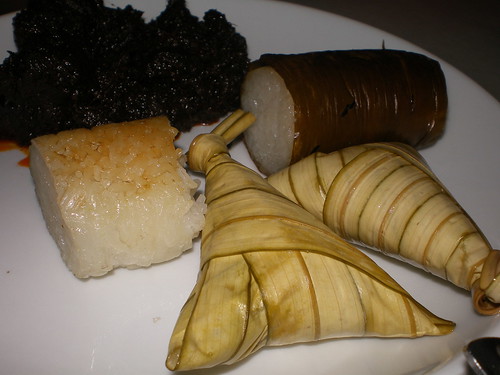
Rendang tok, ketupat & lemang

There are things that taste so good that you will say, “I must blog this!” as you are eating the foods. Rendang tok is one of them. It is not a dish that anyone can cook. Rendang tok, as I am given to understand is from Perak. We can get rendang tok, ketupat and lemang from the Lorong Kulit market in Penang.

rendang tok,ketupat,lemang

Rendang tok is a combination of all the herbs we can find in our Malaysia’s garden. Cekur, daun limau purut, lengkuas, serai, daun kunyit and all combine together with the beef and other spices and santan made it such a lovely beef curry dish. It gives very intense flavour and hence, best eaten with the lemang or ketupat.

rendang tok,ketupat,lemang

It must have taken a long time to cook those slices of beef until they are so tender and melts in the mouth. Rendang tok, ketupat and lemang are one of those things that Malaysians ought to experience eating and appreciate our varied traditional Malays heritage in the form of delicious foods.

The portion of rendang tok we bought only costs RM3 and the ketupats sold for RM1 for three. The lemang costs RM1 for two pieces. So cheap!

Categories:

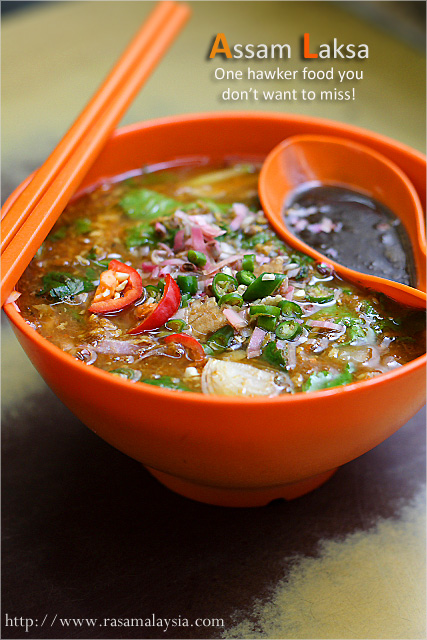
Penang Assam Laksa

Penang Assam LaksaRecently, a friend of mine in Hong Kong asked me about Penang Assam Laksa. She told me that she had it in Penang and has been craving it and requested me to give her the recipe. I told her that she will have to go back to Penang again if she really loves it as my recipe will not do justice to the real Laksa you get in Penang.

Laksa (as we Penangites call it) or Assam Laksa, is the staple of Penang hawker food. If you come to Penang and there is one dish that you can try, this is probably it as you can’t get anything close to the real taste outside of Penang…

My aunt and my mother used to cook Laksa a lot while I was growing up in Penang. Preparing this dish is no simple matter. I remember helping out in the kitchen for hours; picking flesh off little Ikan Kembong(Mackerel Fish), cutting cucumber, lettuce leaves, red onions; plucking mint leaves off their stems and slicing little bird’s eye chilies…

Cooking this dish starts with boiling the main ingredient, Ikan Kembong, in a pot of hot boiling water. Once the fish is cooked, you scoop them up and leave the broth for later use. Pick the flesh off the fish, then put them back into the broth and add in the special blended chili paste made of fresh red chilies and dried chilies, belacan (dried shrimp paste), shallots, and a little garlic. To get the sour taste of Laksa, add in generous doses of tamarind juice into the broth. Leave the fish broth simmering for at least an hour and then you serve them over a bowl of Laksa Noodle and the freshly chopped vegetables plus some dark “Heh Ko” (liquidy prawn paste) and you have Laksa.

For the best Laksa in Penang, click here for “My Insider Guide to Penang Hawker Food“–a comprehensive food guide to the best of Penang hawker food. For my recipe of Penang Assam Laksa, please click here.

Enjoy!

thanks- rasamalaysia

Categories:

Serunding Kelapa Ringkas(Over Easy Savory Coconut)


Aidil Fitri's meal or any Kenduri kendara (gathering) will never be complete without mom's delicious Serunding kelapa(Savory coconut). The first year I celebrated Aidil Fitri in the US, I cooked mom's serunding kelapa recipe exactly the way she would cook it. I find it very time consuming and my hand just stiffed after grating the fresh coconut. The second year, I decided to cook it my quick and simple American way.

  • 1 cup of sweet coconut flakes
  • 1 tbs cumin powder
  • 1 tbs coriander powder
  • 1/2 tbs cinnamon powder
  • 1/2 tablespoon turmeric
  • 1 tablespoon chilli powder
  • chopped shrimp or can also use dried shrimp
  • 1 tablsepoon chopped lemongrass
  • a pinch of salt

Heat non stick saucer pan on medium heat stove. Stir the coconut without oil until brown. Then add chilli powder, cumin, coriander, cinnamon, turmeric, shrimp, lemongrass and salt until brown.
The smell is divine! Serve this as side dish with cooked rice, or you can eat it just by itself.

Another way to add a dash to the serunding is to mix it with cooked shrimp(small size).Yummy!
Enjoy!

Thanks Zuraida

Categories:

Sep 20, 2010

Rendang Tok & Lemang at Tapah highway

For the Penangites, do you know that you can get nice rendang tok from the Lorong Kulit market? There is a young Malay chap who sells lemang, ketupat, rendang tok, serunding and dodol near the entrance where TNB is. Try it if you haven’t eat rendang tok before.
What is rendang tok? It is dry beef curry which is very flavourful. The taste of lemongrass gives the rendang a very nice taste. The beef is tender and melt in the mouth and the spices and herbs take away the gamey smell of beef.
The other day when I was travelling to KL, I found a stall at the Tapah Highway stop selling similar things. Then, there is also a stall in Jusco in Midvalley. Somehow the one I bought from Lorong Kulit is much nicer.
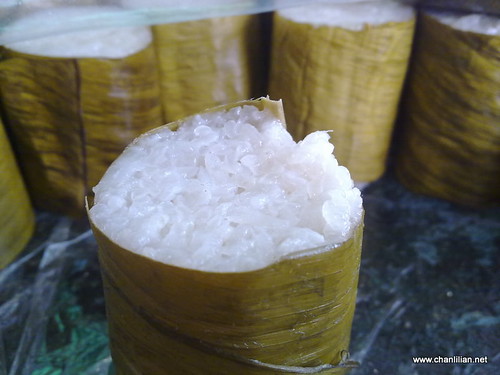
lemang
All these photos were taken with my Nokia N97. The photo quality is not too bad and the best part is I can immediately post these photos on my Facebook. Nowadays, I post a photo of almost everything I ate. So, if you have add me in your Facebook, please do so. :)
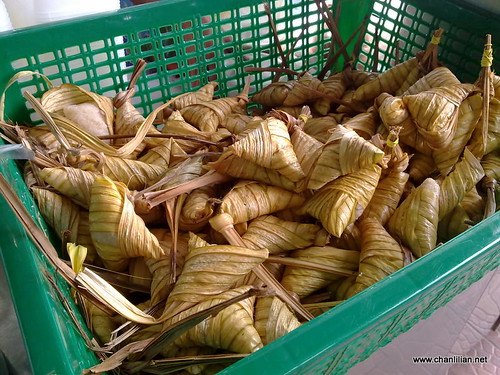
ketupat
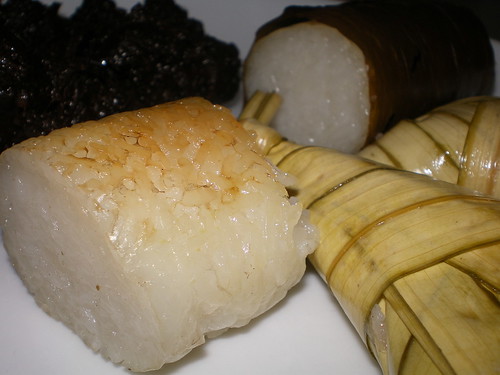
The first photo is the lemang while the above is the ketupat. Though they are made of almost the same thing, they taste different if these are cooked nicely. I love the ketupat from Lorong Kulit. Now that I talked about it, I almost want to drive to Lorong Kulit tomorrow morning and get some.
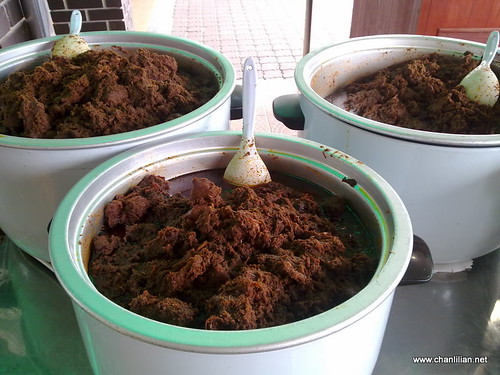
rendang tok
The rendang tok from the Tapah highway stop come in huge pots. Business is brisk and these are sold by grammes. I have forgotten how much but they ain’t cheap as a small container costs about RM10.
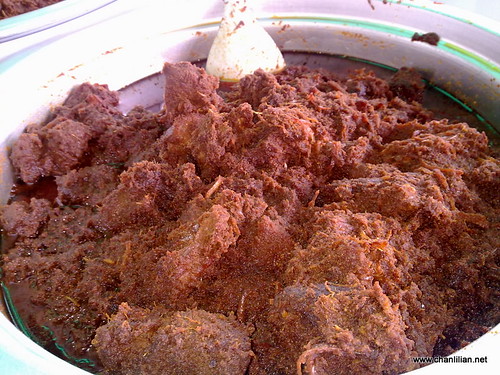
rendang tok
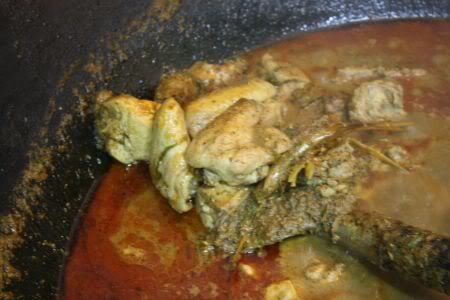
A close up of the rendang tok. It is not to be confused with the regular rendang because this is the dry version and doesn’t have the overpowering taste of santan. Instead, it is more tangy and less ‘jelak’ when taken with lemang or ketupat.
Oh ya, rendang tok is not something you can actually cook at home, so go buy.

Categories:

Sep 19, 2010

Lemang Pak Ali (Warisan)

take your pick from all that lemang in various sizes

I'm back! Had a good break even though it was a super hectic schedule. Been suffering from minor jetlag....hence, no blogging yet until this week. Plus, I haven't been doing anything exciting to blog about too.

cracking that bamboo open...

Keeping with the Raya theme, I thought I'll blog about lemang we had yesterday. Did a quick trip down to Lembah Keramat (not Keramat okay, as I got scolded by Splashie Boy for this wrong statement, since it meant him making a few wrong turns!) on Saturday night after work and managed to get the famous lemang.

so yummy and delish...one is never enough!

Popularly known as Lemang Pak Ali, even though the card says Lemang Warisan, there is a cute signboard at the house they operate at, proclaiming them to be the "Lord of the Lemang". What makes their lemang special, according to an article I read before, is they use wild banana leaves to wrap the lemang. Usually, you can get kinda dissapointed with lemang - bits of uncooked rice and hard bits within, but this lemang was perfect. Soft and aromatic, everyone couldn't stop eating it for lunch yesterday.

gulai kawah...cooked in a large wok

To accompany the lemang, we had bought a portion of almost black colour rendang tok. Sadly to say, the pictures of it didn't turn out well but the rendang tok was super yummy. A bit spicy from all the pepper used but very tender and delicious, that one still continues to eat even though it burns your tongue. There's also gulai ayam (as seen above cooking in a large kawah aka the wok), serunding, home made cookies and ketupat daun palas at the place.

Categories:

Lighting Up Pelita for Lebaran

I have always been a true believer in the setting up of pelitas outside and all around the house come Hari Raya season. This was an activity that my dad and I would do together when he felt I was old enough to handle kerosene and a lighter. Pelitas add warmth to the season and are subtle reminders of the old kampung days when electricity access was limited and people relied solely on kerosene lamps for light in the dark.
Nowadays people install strings of colored light bulbs in the vicinity of their house compound for that bright festivity look, and although our house too has them, I have always been fond of pelitas in illuminating our home. This year, after so many years of abandoning the tradition, I decided to set out to look for my pelita lamps and relive the excitement.
I came across these plastic pelitas but they were in what I thought were inappropriate colors for the season: blue and red! When I was growing up,pelitas were mainly made of tin and I was so keen on getting some original tin pelitas. Not happening. Every shop I went to claimed that tin pelitas were no longer available, at least not in this part of town. That adds yet another childhood item in my list of rare finds.
In the end I settled for some green and yellowpelitas, colors which I thought represented Hari Raya well. I also bought some other things in order to get started with hanging up pelitas.
1. Minyak tanah, or kerosene oil. A 1.5 litre bottle of minyak tanah was RM3.
2. I paid RM4 for a pack of 10 pelitas. I've seen them being sold for anywhere between RM4 and RM5.50. Shop around if you plan to buy loads.
3. A trusty lighter.
4. Some galvanized wire to hang the pelitas.
To get started, I had to worm thesumbu or wick into its metal holders. This was the part of pelita hanging that I think is the toughest. I used a long wire to push the sumbu up.
My mom and dad decided to help out on this mission, which saved me a lot of time. Doing this together with your family can prove to be very fun indeed.
Once I got my wicks ready, I capped my lamps. We had twenty to work with, a number that worked well with the size of our house compound.
Dad helped out with the wires by cutting them into shorter parts. He also said he wanted his hands to taste a bit of fame on Mahdzan.com. :)
Our pelitas were ready to be hung, and hang them we did. With some twisting and turning of the wires, I managed to secure the pelita onto our fence.
Unfortunately, the sky growled with thunder, indicating that it was going to rain any minute. Ramadan this year has been a very wet one in Malaysia, a very rare occurrence since Ramadan has always been notorious for its timely hot weather. To protect my wick from being soaked, I covered mypelitas in plastic and decided to wait for another night to light them up.
A few nights later, the weather looked promising. I filled up all twenty pelitas with minyak tanah and by the time I was done, I had used up almost 3/4 of the 1.5 litre bottle of minyak tanah. I filled onepelita about halfway to the brim with the kerosene oil.
I waited for a minute for the wicks to seep up some of the oil before lighting them up with my lighter. They will lick up your lighter flame much faster if you do it this way.
And here we go a-blazin'! Stand back! If the wicks have soaked up enough kerosene, it's normal to see them flare up like this. Don't get your face or hair too close when you're firing the lamps.
Here are about 10 of our lovely pelitas, all lit up with their little long flames dancing lazily away in the night. I've always loved lit-up pelitas; they make the most beautiful sight.
Of course, with the oil lamps all around the house, what better time to engage in some sparkler activity! It's bunga api time! My niece and nephew have never played with bunga api, and the great aunt that I am will show them what being a kid is all about come Hari Raya!
Since the kids were too young to light up their own sparklers, I gave them a helping hand with torching it.
Oooo...! Aaaa...! It's been eons since I've played with bunga api and my, what a welcoming scene this is! I'm not particularly fond of this type of sparkler since it's made out of paper and tends to give out more smoke than the ones that come with metal handles. But I couldn't get my favorite "Black Cat" brand bunga api, so this cheap stuff will have to do.
The kids were excited with their firstbunga api experience but also displayed a little bit of fear in holding the sparklers. Adani looks real rigid holding one!
Addin, my nephew, was a bit takut as well and ran away a few times when I tried handing him a sparkler! It'll be my utmost pleasure to tell him when he's all grown up about how he screamed like a girl in the face of his first bunga api! :) In the end he decided to show me how brave he was and confidently held on to a sparkler, with me nearby of course.
Because I didn't cover the oil lamps with plastic after putting them out, they were exposed to the rain during the night and the metal parts rusted out. :( Dad then suggested that the next time I put uppelitas, I should smear some grease onto the metal pieces so that they won't rust in damp conditions.
However you decide to decorate your house this Raya season, nothing can quite beat the beauty of this timeless classic: the

thanks fairy.mahdzan

Categories:

Sep 16, 2010

Hari Raya Puasa

Muslims celebrate the festival of Aidilfitri – popularly known as Hari Raya Puasa, or simply Hari Raya (Day of Celebration) in Malaysia – to mark the culmination of Ramadhan, the holy month of fasting.

It is a joyous occasion for Muslims, as it signifies a personal triumph, a victory of self-restraint and abstinence, symbolising purification and renewal.

Prayers at the National Mosque during Ramadan

Fasting during the month of Ramadhan is compulsory or wajib, whereby Muslims are required to abstain from satisfying their most basic needs and urges, daily, between sunrise and sunset. It is one of the five tenets of Islam; as is the paying of zakat (alms tax for the poor), which must be tithed by the end of Ramadhan.

In Malaysia, the period of fasting ends when the new moon is sighted on the evening of the last day of Ramadhan. The actual sighting is conducted by state appointed religious officials at various vantage points (usually at hilltops) throughout the country.

If the crescent is sighted, the following day is then declared the first day of Aidilfitri, which is also the beginning of the 10th month of the Muslim calendar Syawal.

A time to forgive and forget

Aidilfitri is celebrated for the whole month of Syawal, but in Malaysia, only the first two days are observed as public holidays. It is widely common however, to see Muslims taking the first week off from work.

Urbanites make their annual pilgrimage to their hometowns (this is popularly referred to as balik kampung), to be with parents, relatives and old friends. Thus, cities like Kuala Lumpur get relatively quiet during the festive season of Aidilfitri.

Balik kampung

The Muslim community ushers in the first day of Aidilfitri by congregating at mosques for morning prayers. Everyone is usually decked out in their traditional best to mark the special occasion. Men are usually dressed in Baju Melayu, while the Baju Kurung, the quintessential Malay attire for females, is the prefered choice for the fairer sex.

Then it's usually breakfast at home with the family, followed by a visit to the cemetery where deceased loved ones are remembered; graves are cleaned and cleared of overgrowth, and prayers are offered to Allah.

This is also a time to forgive and forget past quarrels. Asking for pardon is done in order of seniority. The younger members of a family approach their elders (parents, grandparents etc) to seek forgiveness, to salam (Muslim equivalent of a handshake), then kiss the hands of the older person as a sign of respect.

The usual greeting (that is uttered with the salam) during Aidilfitri is “Selamat Hari Raya”, which means “Wishing you a joyous Hari Raya”.

A family elder giving out duit raya and ketupat

Children and old folks are given duit raya or gifts of money, in small envelopes. In recent years, many givers have opted for the Chinese practice of putting the money in ang pow packets; however instead of the usual red, the packets are green in colour.

Although the first three days are celebrated on a grander scale, many Muslims hold “open house” throughout the month, where friends and neighbours of other races are invited to join in the celebrations.

Before the big day

The joy of Hari Raya Puasa actually begins before the first day. A week or so before the big day, excitement mounts as the house is readied for the celebration with new furnishing and decorations.

Children lighting kerosene lamps or 'pelita'

Of particular interest are the last 10 days of Ramadan, where many keep vigil for Lailatul Qadr (The Night of Decree), the night when the Quran was sent down. It is believed that angels descend and shower blessings on that particular night, so homes are brightly decorated with oil lamps or pelita.

Mosques, as well as government and some commercial buildings, are also decorated and brightly lit to mark the auspicious day. The most predominant colour seen in decorations during this season is green which is commonly associated with Islamic items. It is often combined with yellow or gold.

Decorations with Islamic and Malay motifs

As for motifs, by far the most frequently used symbol is that of the ketupat (rice cakes wrapped in coconut leaves); it is invariably used on Hari Raya greeting cards, hanging decorative items, and as a promotional image for the season.

The ketupat is traditional Hari Raya fare and is often served with beef rendang (beef cooked with spices and coconut milk) and/or satay (grilled meat on a skewer).

Other festive delicacies include lemang (glutinous rice cooked in bamboo tubes), serunding (dessicated coconut fried with chilli) and curry chicken.

Categories:

Copyright © JommJalan | Powered by Blogger