Apr 28, 2010

Putu Piring

@ Pasar Malam, Section 17, Petaling Jaya


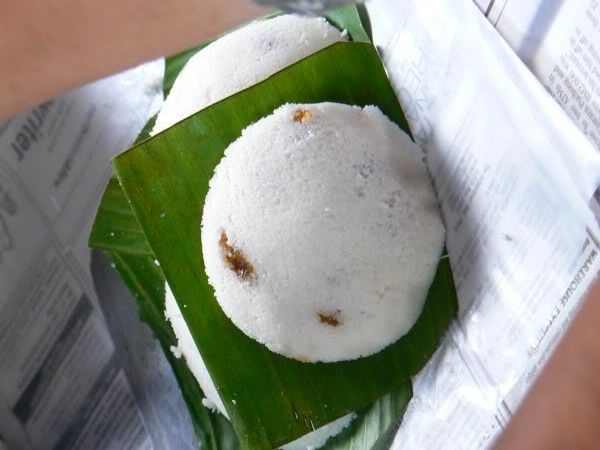
One of my all time favourite snacks - the humble putu piring. Made from rice flour that is packed into a metal container and filled with gula melaka (palm sugar), it's utterly delicious. I often stop to taste this snack whenever I see it since I have been on a quest to search for the perfect one. Most places I have eaten just don't make it up to standard. For instance, the stalls in front of Giant Kelana Jaya like to pre-make theirs with a quick reheat when a customer orders them. This means you don't get a fluffy cake but one with a sub standard taste to it. Although the girls in front of Bangsar TMC are pretty good, I often find they skimp on their ingredients as the balance of gula melaka (palm sugar) versus the rice flour was not in proportion.


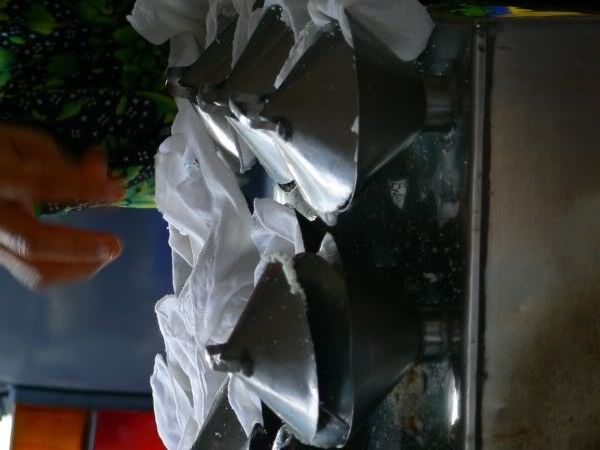
I stumbled on to this stall located inside a roadside van at this night market. The market is popular among students from the nearby Islamic University Matriculation College and the University Malaya students who reside in Section 17 searching for a cheap meal for dinnertime. Run by a couple, the lady has the task of packing the rice flour and gula melaka into the tiny metal container which resembles a "piring" i.e. a plate. It's then placed in a specially built steamer with conical inserts on top of white cotton cloth. Then it's covered with a conical metal lid and left to steam for a while.


As and when orders are placed, they will reach into the steamer and remove the metal containers and cotton cloth squares. Grated fresh coconut is placed on the putu piring and then covered with a square of banana leaf. This is all packed in a plastic and newspaper parcel, ready for you to take home. For additional flavour, this stall covers the stack of putu piring with a square of banana leaf before folding the parcel. Best eaten piping hot, this putu piring was fantastic - the right balance of sugar and flour coupled with a fluffy texture and the fresh grated coconut. Simply sublime for a mere RM0.40 per piece.

Categories:

Apr 21, 2010

My PhotoShoot - @ Taman Orkid KL


Orchid Garden KL
The Orchid Garden is opposite the Bird Park. It's a part of what is called the Lake Gardens. When you leave the Bird Park behind and you cross the road, then you're at the entrance of the Taman Orkid (the Orchid Garden). It's a 1 ha floral paradise, where you can admire the orchids and and pick tips on how to grow these magnificent flowers. The Taman Orkid can be combined with a visit to the Bird Park. 

The admission to the Orchid Garden is free. Only on Saturday, Sunday and Public Holidays you have to pay admission (RM1,-). The Taman Orkid is situated on a scenic hilltop within The Lake Gardens. Around and on this hilltop all the orchids are growing. 

An adjoining section is devoted to the hibiscus, Malaysia's national flower. This section showcases more than 2,000 varieties of hibiscuses.


The Lake Garden (Taman Tasik Perdana) is probably the nicest park area in KL. You'll see people jogging, playing ball, and in the mornings practicing tai-chi.

The taxi drops you off the Bird Park. You'll have to cross the road to get to the Taman Orkid. The path is going slightly up and then you'll see the counter of the Orchid Garden. We had to pay during our stay, because we went on a Saturday. 


Don't worry, because Saturday and Sunday are the best days to visit the Garden. The admission is very low-priced (RM1.-) and the Garden is transformed into a lovely Orchid bazaar.
 Tourist and the local people are walking around in the garden. They are looking at the stalls, where you can buy blooming orchids and souvenirs. 

Categories:

Apr 20, 2010

Lontong


Lontong @ Pinang Masak


It's taken me quite a while to venture here probably because of the traffic jam that clogs up the entrance to Bukit Tunku. One day, I decided to brave it and found it wasn't too bad since they have open the ramp directly to Segambut/Jalan Ipoh.

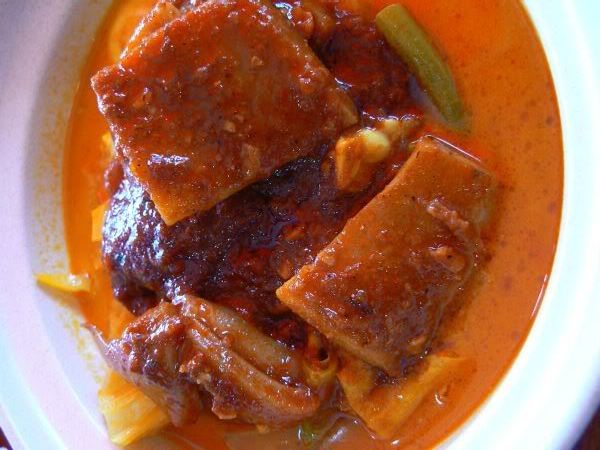
I'm glad I did make the effort as I got to savour their fantastic lontong. The only thing which I didn't like was the technicolour orange it came in. I suspect it was also an effect of taking the picture under an orange canopy hence the extreme orangey-ness of the lontong.

Tastewise, it was rich but the consistency was not too thick making it extremely slurpy. Eaten with slightly soft nasi impit (compressed rice cubes), vegetables and tempe plus topped with sambal sotong, it was hard not to lick the bowl dry. I especially liked their sambal sotong which wasn't too soft but had a nice bite to it. However prices here are of course higher than the normal Malay stall and my bowl of lontong was slightly less than RM10.

Business has been good and they now boast of three more outlets scattered around town. I've also sampled their kuih muih (Malay cakes) before in a previous visit and they're pretty good too. Will definitely have to come back to try their various dishes for lunch.


Categories:

Apr 17, 2010

Nasi Lemak Tanglin

@ Jalan Cendarasari, Kuala Lumpur


Join the crowd at Tanglin Food Court just next to the Kuala Lumpur Community Clinic for some fantastic Nasi Lemak. No matter what time I go, there's always a queue of people in front of the stall. Don't worry as the queue moves quite fast once everyone gets their food. The Tanglin Food Court is bustling with people from the clinic and the nearby police departments. Even car companies place their cars and salemen in front of the food court hoping to hook some sales from the crowd.


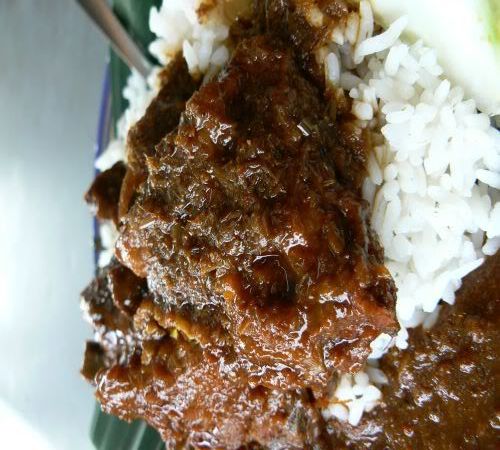
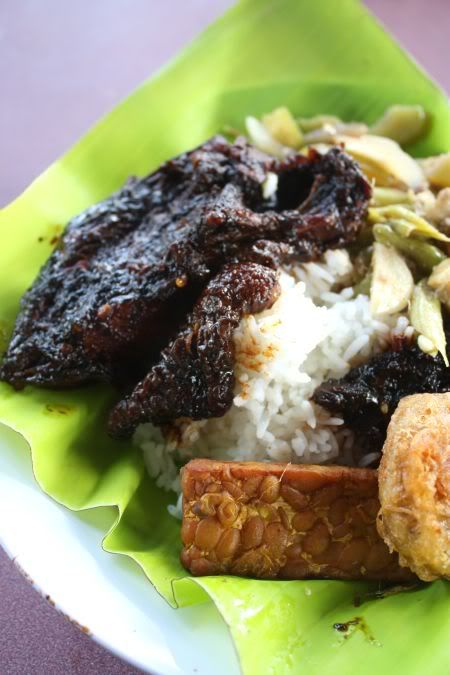
The times when I indulge in a plate of Nasi Lemak here, my must order is their Sambal Sotong. Totally unlike any of the other stalls, their sotong is not rubbery. It also tears easily when you seperate it using a fork and spoon. Another great thing to have is their Sambal Limpa (Beef Liver) which is also tender but has a slight bite to it.


If you wish for a more substantial meal, go for the Chicken Rendang which is tender and full of flavours. For me, I'm happy as long as you give me lots of their sambal which is unique here with a slight nutty taste accompanied with their fragrant steamed coconut rice. Unlike other stalls, it's not so spicy that you can actually taste the sambal.

If you do drop by here, do come early to get the full spread of food. Parking is also quite easy as they provide parking at the side of the food court. For something more substantial, visit Pak Din's Ikan Bakar stall next door for grilled fish over charcoals.

Categories:

Apr 12, 2010

Nasi Ambeng


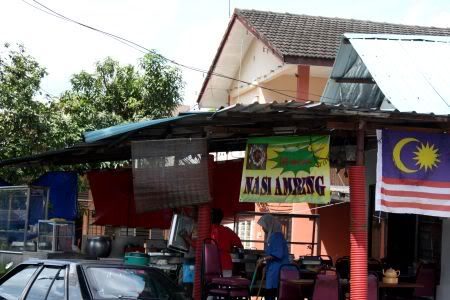
the small stall trading in front of the house

I never tire from exploring Kampung Baru - it is like every nook and cranny there has good food, if I look hard enough. For me, the contrast between the old kampung houses and the modern skyscrapers always reminds me of how far we have come in development. Parts of the village has gone through some sprucing up with new pavements but to me, it is still a great place to search for Malay food.

delicious ayam masak merah using ayam kampung

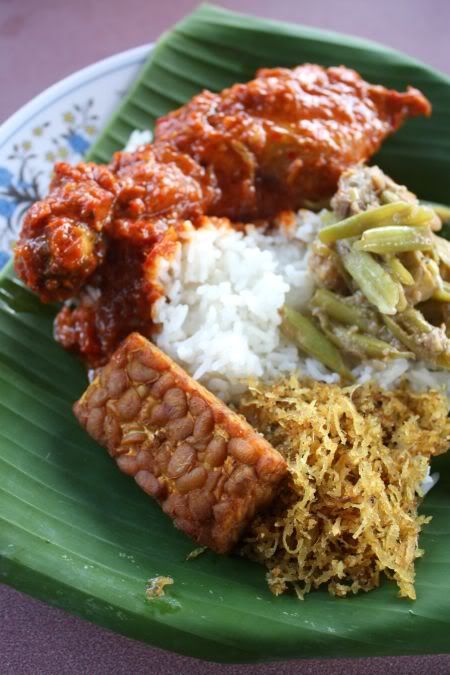
We wandered there last weekend, to search for this Nasi Ambeng stall. A Javanese dish, Nasi Ambeng or Ambang is usually served during weddings and parties (aka kenduri). Traditionally, you place 4 portions of rice, fried noodles, chicken, serunding, tempe and etc on a tray lined with banana leaves. Everyone is encouraged to share this platter. Nowadays, the stall owners serve a different variety - single portions that you eat like Nasi Campur (mixed rice). Some varieties also see them packed like nasi lemak bungkus except the packets are larger. Here, the rice is packed tightly with all the accompaniements in a banana leaf, which infuses the rice with a fragrant aroma.

splashie boy's selection of ayam kicap and of course, his favourite bergedil

Located along the quieter stretch of the main thoroughway of Kampung Baru i.e. Jalan Raja Muda Musa, it is not hard to spot this stall within a house as they have a banner proclaiming they sell Nasi Ambeng. Only available from Friday to Sunday during lunchtime, you get a lovely view of the Petronas towers, if you sit there and dine.

the view to kill

We had a choice of fried tempe (cut in chunks versus thin slices), fried tofu, serunding kelapa, ayam kicap, ayam masak merah, green beans fried with tempe and tofu - a kind of sayur lodeh, ikan keli, bergedil and etc. This place also serves lontong every morning using most of the same ingredients - sayur lodeh, tempe and serunding kelapa.

I loved the chicken here as they use the tougher ayam kampung for their dishes. A little tough but still much better than the mushy and soft type of meat you get from antibiotic injected chickens. The meal was very satisfying and pretty reasonable - two portions with drinks cost us less than RM11. While the food was not totally genuine, it was still a very good meal.

Categories:

Apr 9, 2010

Vanilla Cheesecake


Cheesecake

I come to you today with one of my very favorite desserts, cheesecake. It’s one of those desserts that connected with so many memories for me, like the years when my little brother was totally obsessed with it, he had to have it every time we went out to eat, and usually ended up licking the plate when he finished! It’s also the dessert I bake every year for my dad’s birthday. It’s delicious, rich and creamy, and pretty easy!

This is the most basic cheesecake recipe you can work with, but with a couple of touches that kick it up a bit. Firstly, start with really good ingredients, especially the cream cheese. That’s the only way you’re going to get a really fabulous cheesecake. Also, considering making your own graham crackers! It sounds like a lot of work, but it’s totally worth it. I made my own for the first time for this recipe, and it really added a lot of great flavor…

What’s great about cheesecake is you can top it with pretty much anything, fresh fruit, caramel, chocolate shavings, or my favorite, jam. I topped one a traditional cherry and the other with scrumptious orange-elderflower marmalade. Have fun with it!

BASIC VANILLA CHEESECAKE
from Baking Basics and Beyond

This will make one regular sized cheesecake, or about 4 of the small 4 inch ones like I made.

INGREDIENTS:

Crust:
1 1/2 cups graham cracker crumbs
1/3 cup sugar
1/4 cup butter, melted

Filling:

Three (3) 8-ounce packages of cream cheese, softened
1 cup sugar
3 eggs, room temperature
1 teaspoon vanilla

METHOD:

Heat oven to 350 with oven rack in middle. Lightly grease sides of a 9 inch springform pan.

Crust: Combine graham cracker crumbs, sugar and melted butter in a medium bowl. Press crumbs into bottom and slightly upsides of prepared pan.

Filling: Beat cream cheese in bowl of a heavy duty mixer on medium speed until creamy and free of lumps. Scrape down sides of bowl. Gradually add 1 cup of sugar, scraping sides of bowl occasionally, and beat until smooth.

Reduce mixer speed to low and add eggs, one at a time, scraping sides of bowl after each egg is added. Add vanilla and beat just until smooth. Pour batter into crust and smooth the top.

Bake 38 to 43 minutes or until cake edge is set and center still jiggles. Remove cheesecake from oven.

After removing cheesecake from oven, run a small metal spatula around the edge to help prevent cracks. Cheesecakes need to be cooled slowly. Place them on the top of the oven for about 30 minutes and then let them cool to room temperature before refrigerating. Plan to refrigerate for at least 4 hours.

To serve, release sides of springform pan and place cheesecake on serving plate. Dip knife into warm water and wipe dry before cutting slices. Garnish with topping of your choice!

GRAHAM CRACKERS
From Smitten Kitchen
Makes 10 4 x 4.5-inch graham crackers or 48 2-inch squares

This recipe will make way more than you need, but the crackers are so delicious, you won’t mind.

INGREDIENTS:

2 1/2 cups plus 2 tablespoons (375 grams) unbleached all-purpose flour
1 cup (176 grams) dark brown sugar, lightly packed
1 teaspoon (6 grams) baking soda
3/4 teaspoon kosher or coarse sea salt (4 grams)
7 tablespoons (3 1/2 ounces or 100 grams) unsalted butter, cut into 1-inch cubes and frozen
1/3 cup (114 grams) mild-flavored honey, such as clover
5 tablespoons (77 grams) milk, full-fat is best
2 tablespoons (27 grams) pure vanilla extract

Topping (optional)
3 tablespoons (43 grams) granulated sugar
1 teaspoon (5 grams) ground cinnamon

METHOD:

Make the dough: Combine the flour, brown sugar, baking soda, and salt in the bowl of a food processor fitted with the steel blade or in the bowl of an electric mixer fitted with the paddle attachment. Pulse or mix on low to incorporate. Add the butter and pulse on and off on and off, or mix on low, until the mixture is the consistency of a coarse meal.
[Alternately, if you don't have a food processor or electric mixer, you can cut the ingredients together with a pastry blender. Just make sure they're very well incorporated.]
In a small bowl, whisk together the honey, milk, and vanilla extract. Add to the flour mixture and pulse on and off a few times or mix on low until the dough barely comes together. It will be very soft and sticky.

Lay out a large piece of plastic wrap and dust it lightly with flour, then turn the dough out onto it and pat it into a rectangle about 1-inch thick. Wrap it, then chill it until firm, about 2 hours or overnight. Meanwhile, prepare the topping, if using, by combining the sugar and cinnamon in a small bowl and setting aside.

Roll out the crackers: Divide the dough in half and return one half to the refrigerator. Sift an even layer of flour onto the work surface and roll the dough into a long rectangle about 1/8 inch thick. The dough will be sticky, so flour as necessary. Trim the edges of the rectangle to 4 inches wide. Working with the shorter side of the rectangle parallel to the work surface, cut the strip every 4 1/2 inches to make 4 crackers.

Place the crackers on one or two parchment-lined baking sheets and sprinkle with the topping. Chill until firm, about 30 to 45 minutes in the fridge or 15 to 20 minutes in the freezer. Repeat with the second batch of dough. Finally, gather any scraps together into a ball, chill until firm, and re-roll.

Adjust the oven rack to the upper and lower positions and preheat the oven to 350°F.
Decorate the crackers: Mark a vertical line down the middle of each cracker, being careful not to cut through the dough. Using a toothpick or skewer, prick the dough to form two dotted rows about 1/2 inch for each side of the dividing line.

Bake for 15 to 25 minutes, until browned and slightly firm to the touch, rotating the sheets halfway through to ensure even baking.

Categories:

Mee Goreng Mamak


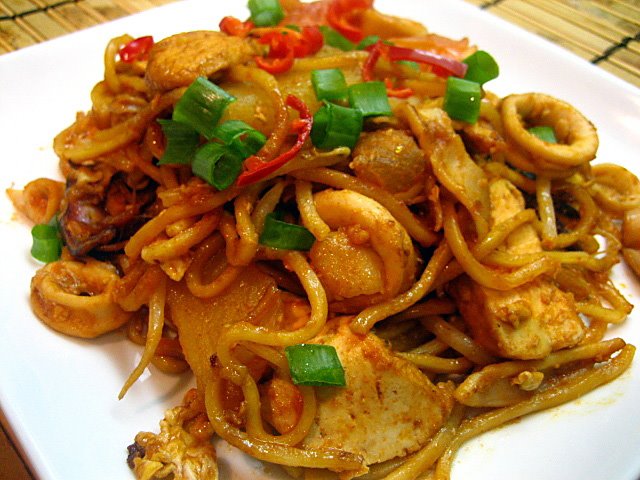
Indian Mee Goreng / Indian Fried Noodles

It’s been a busy week and I haven’t had much time to cook. However, food is food; you have to satiate your hunger regardless of how busy you are.

I wanted to prepare something not overly complicated yet different tonight so I cooked up this nice serving of Mee Goreng.

Indian Mee Goreng / Indian Fried Noodles

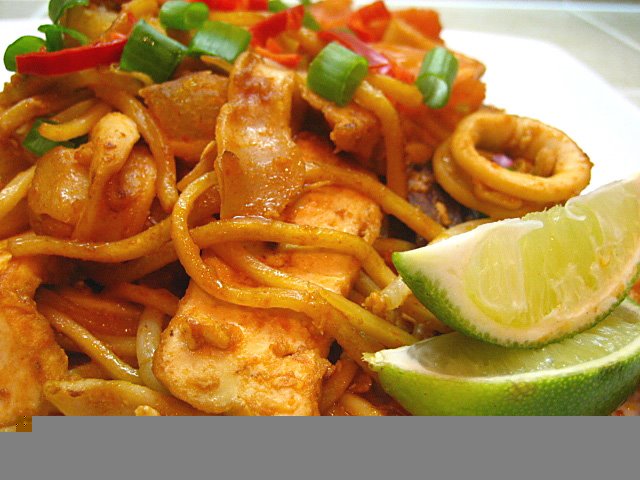
Sour, spicy, sweet, and tangy come through in this dish. I loved the fried bean curd, potato, and squid (a substitute for baby octopus or cuttlefish). Mee Goreng is darn delicious.


RECIPE: MEE GORENG

INGREDIENTS:

Cooking Oil
2 cloves garlic (chopped)
3 tablespoons of chili paste or to taste (recipe below)
1 lb of Yellow Noodles (rinsed)
3 pieces of dried bean curds (cut into pieces)
1 potato (boiled, peeled, and sliced)
2 eggs
4 squids (cleaned and cut into rings)
A handful of bean sprouts
1 stalk of spring onion (cut into small pieces for garnishing purposes)
2 red chilies (sliced for garnishing purposes)
1 lime (cut into wedges)

Sauces:

2 tablespoon of soy sauce
2 tablespoon of dark soy sauce or kecap manis
3 tablespoon of tomato ketchup
Sugar and salt to taste

Chili Paste:

Blend 10 dried red chilies in a food processor. Add some water and some oil to blend well. Heat the wok and “tumis” (stir fry) the paste until the oil separates from paste. Set aside.

Heat the wok and pour in the cooking oil. Add garlic, 3 tablespoons of chili paste, sliced potatoes, bean curb pieces, and squids. Stir fry until fragrant. Add yellow noodles and sauces and continue stirring. Set the noodles to the side of the wok.

Add some cooking oil and then crack the eggs. Scramble the eggs and mix in with the noodles. Add in the beansprouts and quick stir for another 1 minute. Serve hot and garnish with chopped spring onions and sliced red chilies. Squeeze some lime juice over the noodles before eating.

Categories:

Apr 8, 2010

Mee Bandung Abu Bakar Hanipah & Asam Pedas Parit Jawa

Jomm Muar!
To find the best mee bandung in the world, you need to come to Muar; and to find the best in Muar, you go here:

You can't miss stall plastered with reviews & photos of famous patrons.
Abu Bakar Hanipah runs a stall in Restoran Wah San9A, Jalan Abdullah, Muar. They also have a stall in Tanjung Emas.
In a set-up typical to Muar and a lot of colonial towns, Abu Bakar prepares the food while the owners of Wah San prepares the drinks and other dishes.
Uncle with old legs preparing breakfast. Check out his teko.
The mee bandung was top notch, as always. We came early in the morning, so the lauk was generous. Besides the whole egg & sawi, there are beef pieces, sotong & small shrimps:
Mee was generous, but Uncle made my coffee a bit weak this morning.
They also serve toasts with kaya, half-boiled kampung eggs, nasi goreng and some wicked fried chicken (but I guess you’ve already read the menu in the first photo!). You can also buy ready-made spices to make your own mee bandung at home.
Likewise, the best asam pedas in the world can be found in Medan Asam Pedas Parit Jawa, in a small fishing town off Muar. [Location on Google Maps]
Last time, we already went to Mak Pon’s shop in the Medan Asam Pedas, so we decided to try Ani’s, which is located a couple of steps away. The restaurant had run out of ikan mayong (a type of catfish, with juicily tender meat), so finally we went to Mak Ngah’s which is just next door.
We ordered both tail & head; I prefer the head, of course.
A complete meal set of asam pedas comprises of the fish, some sayur campur & telur dadar. I added half telur masin:
I add kicap manis too, something I took from my late grandpa.
A visit to Muar is also not complete without buying some local coffee! I stocked up withKopi 434 and Kopi Gajah from Sai Kee in town, at 34 Jalan Maharani.

Categories:

Apr 7, 2010

Nasi Ayam Original!


It's hard to find halal nasi ayam hawkers that has been serving 'kai fan' for a long time, and it is even harder to find one that is Halal. This one is. Laily's customers are old timers and even kids whom has grown up eating her chicken rice. Nasi Ayam Laily is located at the SS15 Subang Jaya Food Court called the Square. A typical chicken rice here will consist of a plate of roasted chicken, a bowl of chicken broth, a plate of rice with cucumber slices and of course, garlic chili paste for that extra kick. No steamed version but just as good. 


They don't make chicken rice like Kak Laily's anywhere else. The rice is delicious and flavourful. You can taste the chicken stock in the rice, not too overpoweringl, just right. The tender chicken is glazed slightly with honey and roasted crispy on the outside, juicy on the inside. We suspect that the chicken is semi-boiled, semi-roasted and then fried in a huge wok to give it the nice distinctive Laily flavour. On top of the chicken, light soya sauce is poured.
"You know they use good stock for the rice"
You can even ask for some fried liver and gizzards to go with the chicken. And what else? Chicken feet with the broth. Yup, they have them all. So pour some chili paste on your plate, put in some chicken slices, scoop up some soya sauce to the rice, cut in some sliced cucumbers, mix it all up and in you go... delicious. Order up some kopi ais with that!

Categories:

Apr 6, 2010

Sambal Belacan


Following my recent post on sambal asparagus, I thought I would show you how to make sambal belacan from scratch–a must-have Malaysian condiment and the basic building block for many deliciousMalaysian recipes.
Sambal belacan consists of chilies, belacan (Malaysian shrimp paste), kalamansi lime (limau kasturi), and salt and sugar (to taste or optional). In the US, kalamansi lime is scarce so lime can be used as a substitute. However, in reality, kalamansi lime is made for sambal and lime is inferior when it comes to sambal belacan. So, if you have access to kalamansi lime, please use it, or if you have some, please give them to me…
Sambal belacan as a condiment is something that I can’t do without. I eat my rice and noodles with it, and some Malaysian dishes such as my favorite sweet and sour eggs (masak belanda)Penang char hor fungrilled fish with banana leaves are total awesomeness with sambal belacan.
Anyway, learn how to make sambal belacan with my recipe below and click on the gallery above to learn the step-by-step guide.
SAMBAL BELACAN
INGREDIENTS:
4 oz seeded chilies (sliced thinly)
1 tablespoon belacan (shrimp paste)
1 – 1 1/2 teaspoons sugar
2 tablespoons kalamansi lime juice/lime juice
Salt (optional or to taste)
METHOD:
Clean chilies with running water, seeded and sliced. Transfer the chilies to a mortar.
Heat up a wok or pan on low heat and “toast” the belacan until aromatic. The texture of the belacan would turn dry and powdery after toasting. Transfer out and add to the chilies and start pounding with the pestle until fine. (Some people like their sambal belacan somewhat coarse so it’s personal preference.)
Transfer out to a bowl, add salt and sugar to taste and add lime juice (or kalamansi lime juice). Blend well. You can keep the sambal in the refrigerator for up to a few days.
COOK’S NOTES:
  1. If you don’t have a mortar and pestle, you can use a mini food processor to grind everything.
  2. If you like extra fiery kick in your sambal, you can add a few bird’s eye chilies.

Categories:

Sambal Udang Petai


I have an unusual relationship with my Amah (grandma). To start off with she's my step-grandma, and since I lived abroad for 16 years while growing up I never really got close to her. Distance contributed to the fact that my current relationship with Amah is awkward at best. We do the usual greetings and goodbyes at family gatherings but never really talk. And it has been like this for the past 27 years until I recently took an interest in her cooking and recipes.

Amah has a set repertoire when it comes to the dishes she serves when we visit her. One specialty we always look forward to is her sambal udang petai and when I asked her to teach me the recipe I had no idea that I would be on my way to building a better relationship with her. I spent an afternoon learning her dishes and for the first time in my life we bonded. She was so excited to teach me and I was just as eager to learn. She could not stop talking proudly about how she learnt this specific sambal from a Malay friend of hers in Penang and how in her cooking she loves adding twists here and there to make unique dishes. 

Have wok, will cook sambal udang

I observed as she deftly prepared the sambal with an expertise that only comes from years of experience in the kitchen. She could practically cook with her eyes closed. Amah was so quick that I had to watch closely to make sure I didn’t miss a thing. And her way of giving me the recipe was through quantities and how much things cost. “50 cents worth of grated coconut”… “tamarind you only need like this much” as she shows me a little glob the size of a golf ball… “and belacan no need, but can also”. Cooking done this way by look and feel rather than reducing it down to cups and spoons is the type of cooking our mothers and grandmothers have always gotten by with. And judging by the taste of their food, they’ve probably got it right!

If you had seen us in that kitchen you would have thought we had always been very close. I suppose it's true when they say food brings people closer together.
"Learning this sambal udang brought us closer together"
Sambal Udang Petai

Ingredients:
1kg Prawns (cleaned, shelled and deveined)
5 garlic cloves, roughly chopped
10 shallots, roughly chopped
2 handfuls of dried chili
3 stalks of lemongrass, pounded
1/2 cup santan (preferably fresh)
3 Tbs oil
3 Tbs asam jawa, soaked
1 inch belacan
Handful of Petai
Salt to taste

Method:
Boil the dried chili in water for 10 minutes then rinse it with cold water and get rid of the seeds. This will ensure that the sambal is not too spicy. Blend the chili in a blender to make it into a paste and set aside.

In a large wok heat the oil and sauté the shallots, garlic, lemongrass and belacan till fragrant and brown. Add the blended chili paste and keep stirring. Wait till the oil rises and add a splash of the asam jawa. Stir, then add a splash of santan. 

Turn the heat down and let it simmer and stir occasionally. Add the rest of the tamarind water and another splash of santan. Keep stirring and let the sauce thicken. Once the sauce is thick you can add the prawns just for a few minutes till they are cooked through.

Take out the prawns once they are cooked so you don't overcook them. You can now choose to add the petai and cook for another 10minutes adding more santan to taste. Once the sambal is done you can add the prawns and serve with rice.

Categories:

Copyright © JommJalan | Powered by Blogger